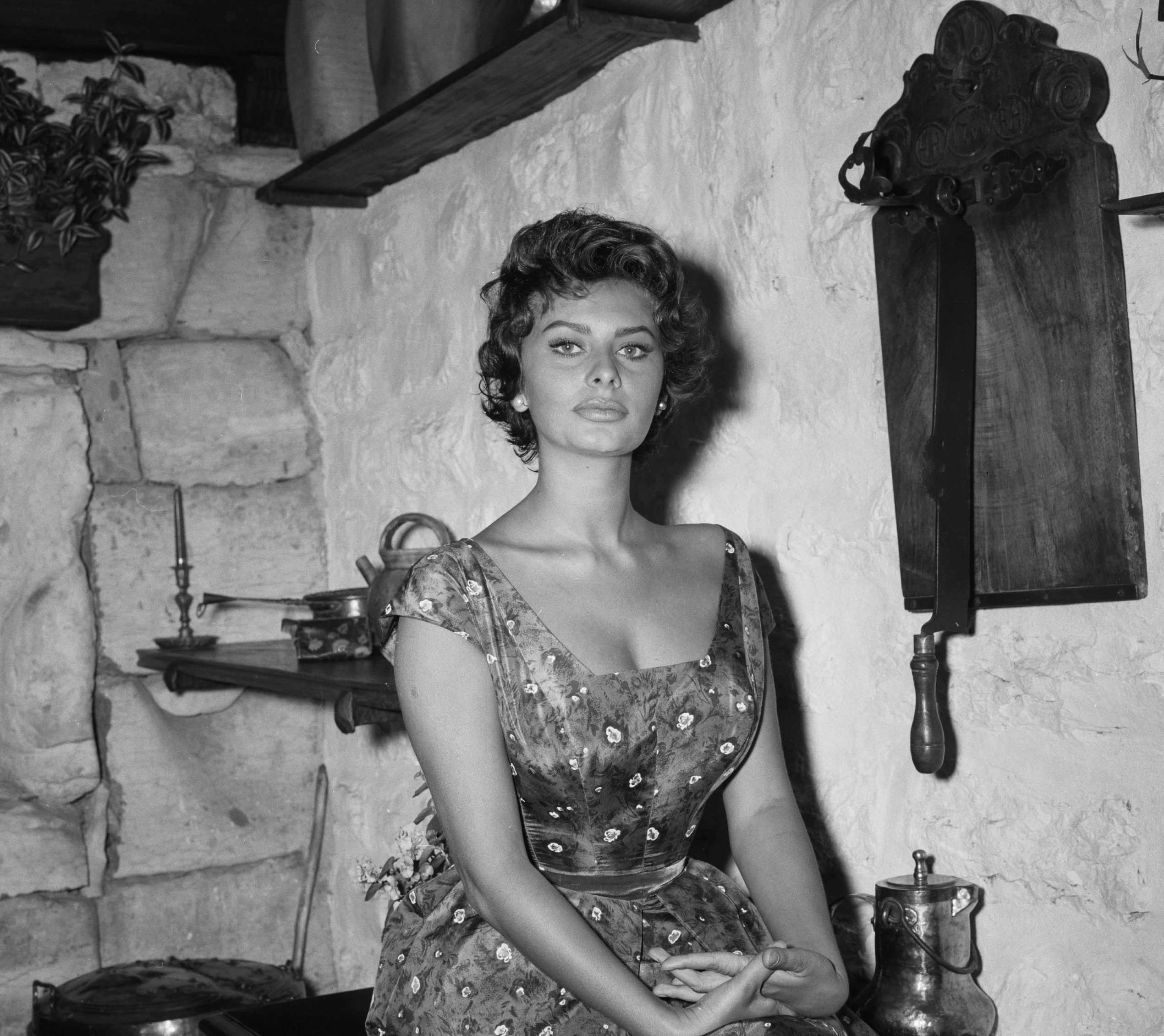

The world of show business did not find her in Hollywood, but on the sun-drenched streets of Tunis. Claudia Cardinale, born on April 15, 1938, as Claude Joséphine Rose Cardinale in La Goulette—a vibrant harbor district near Tunis in what was then the French protectorate of Tunisia—grew up in a large Sicilian community. Her parents, Francesco Cardinale, a railway worker from Sicily, and Yolande Greco, came from Italian families who settled in North Africa. At home, they spoke French, Sicilian, and a bit of Tunisian Arabic—the pure Italian language she learned only later for the camera. She was a tomboy, a “wild child” who dreamed of becoming a teacher, not of becoming an actress. Yet fate had other plans for her.
In 1957, everything changed. The nineteen-year-old won the “Most Beautiful Italian Girl in Tunisia” contest. The prize: a trip to the film festival in Venice. There, Italian producers discovered her. Suddenly, the young woman—who until then had only appeared as an extra in a Tunisian-French short film—stood at the gateway to the big screen. She hesitated at first as she had no formal acting training. But Tunisia’s independence in 1956 and her family’s desire for a better future opened the doors. In May 1958, she signed an exclusive contract with producer Franco Cristaldi and his company Vides—a contract that would shape her life.
Cardinale became Italy’s export star, comparable to Sophia Loren or Gina Lollobrigida.
The Rise in Rome – First Steps in Italian Cinema
Late 1950s Rome was the center of Commedia all’italiana and the burgeoning postwar film scene. Cardinale made her debut in 1958 with smaller roles: in Goha alongside Omar Sharif and in Big Deal on Madonna Street (I soliti ignoti) with Vittorio Gassman and Totò. Italians loved her immediately—as a fresh, natural beauty who never seemed artificial. Her voice, husky and dark, was initially dubbed because her accent was too strong. Nevertheless, she had arrived.
The breakthrough came in 1960. In Mauro Bolognini’s Il bell’Antonio, she starred together with Marcello Mastroianni and displayed a mix of sensuality and vulnerability that captivated audiences. That same year, Luchino Visconti cast her as Ginetta in Rocco and His Brothers—a role alongside Alain Delon and Renato Salvatori that made her the new icon of Italian cinema. Visconti recognized her talent for strong, down-to-earth female characters. Cardinale became Italy’s export star, comparable to Sophia Loren or Gina Lollobrigida, yet with a completely unique, mysterious aura. People simply called her “CC.”
The Golden Sixties – Visconti, Fellini, and the Leap to Hollywood
The years 1963 and 1968 marked the absolute high points of her career. In 1963, she starred in two masterpieces at once. In Visconti’s opulent epic The Leopard (Il Gattopardo), she portrayed the young Angelica Sedara alongside Burt Lancaster and Alain Delon—a sensual, ambitious figure amid the declining Sicilian aristocracy. That same year, she played a film diva in Federico Fellini’s autobiographical masterpiece 8½. Here, for the first time, she used her own unmistakable voice—with its husky, deep resonance that perfectly matched her charisma. Fellini himself praised her natural presence.
Hollywood came calling. Blake Edwards cast her in 1963 as Princess Dala in The Pink Panther alongside David Niven and Peter Sellers. Other U.S. productions followed, such as Circus World (1964) with John Wayne and The Professionals (1966) with Burt Lancaster. Despite multiple successful movies in Hollywood, Cardinale remained skeptical of the rigid studio system. “If I have to give up the money, I give it up. I do not want to become a cliché,” she said in an interview. She preferred to work in Europe, where she was promised greater artistic freedom at the time.
The pinnacle of her international career arrived in 1968 with Sergio Leone’s Western epic Once Upon a Time in the West (C’era una volta il West). As Jill McBain, the widow from New Orleans who finds her place in the harsh world of the Wild West, she delivered one of the genre’s most iconic female characters. The scene in which she arrives at the station—dusty, utterly determined, with a suitcase full of hopes—remains etched in film history to this day. Leone had found the perfect casting: a woman who was neither fragile nor superhuman, but simply real.
She was, so to speak, Tunisian at heart, Italian by nationality, and French by education, as she repeatedly emphasized in interviews.
Later Years, Awards, and Legacy
In the 1970s and 1980s, Cardinale increasingly turned to more mature character roles. She worked with Werner Herzog in Fitzcarraldo (1982), appeared in Franco Zeffirelli’s Jesus of Nazareth (1977), and in Luigi Comencini’s La Storia (1986). Her theater debut came relatively late, but productions such as Sweet Bird of Youth and Tennessee Williams’ The Glass Menagerie demonstrated her versatility. Despite all her success, her heart always remained in Tunisia—she was, so to speak, Tunisian at heart, Italian by nationality, and French by education, as she repeatedly emphasized in interviews.
Her awards are numerous: the David di Donatello for Best Actress (The Day of the Owl, 1968), the Golden Lion for Lifetime Achievement in Venice (1993), the Berlinale’s Honorary Golden Bear (2002), and the Grand Cross of the Order of Merit of the Italian Republic (2018). She remained active well into old age—her final film was L’Île du pardon in 2022. Claudia Cardinale passed away on September 23, 2025, at the age of 87 in Nemours, France. Obituaries from Italy, France, and the entire film world honored her as an “unforgettable heroine” of European cinema, which at the time was in no way inferior to Hollywood’s monumental productions.
Claudia Cardinale was never just “the most beautiful.” She was the strong, mysterious, multifaceted woman who brought the Italian cinema of the 1960s to life: sensual but never cheap, vulnerable but never weak. In an era when cinema oscillated between neorealism and international glamour, she embodied both. Her films remain timeless because she herself was timeless: the lioness from La Goulette who conquered the silver screen and never fully left it.
Main Sources: Cardinale, Claudia with Anne Mori: Io Claudia, Tu Claudia – Il romanzo di una vita (1995) and supplementary biographical details from film archives and interviews
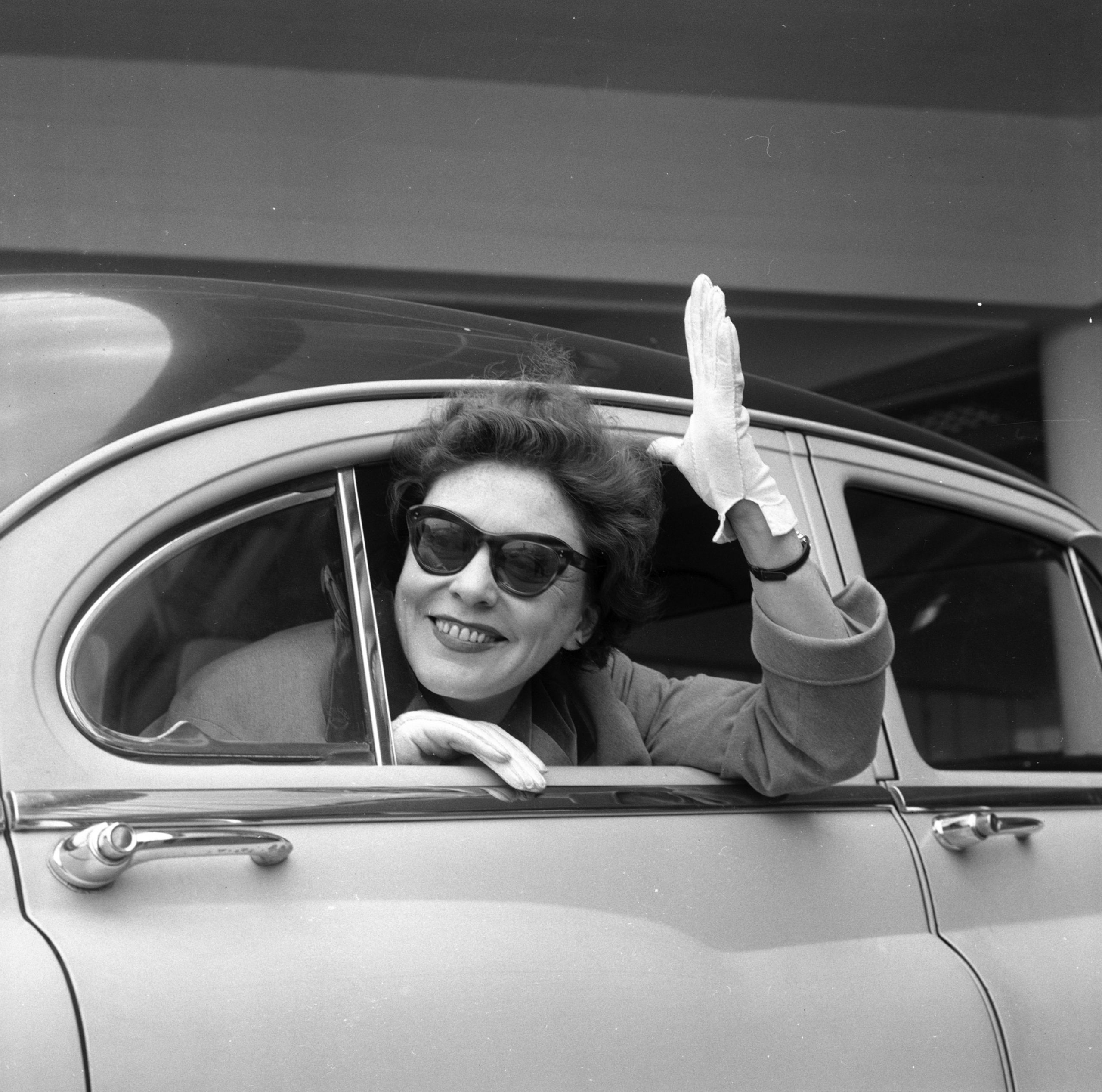
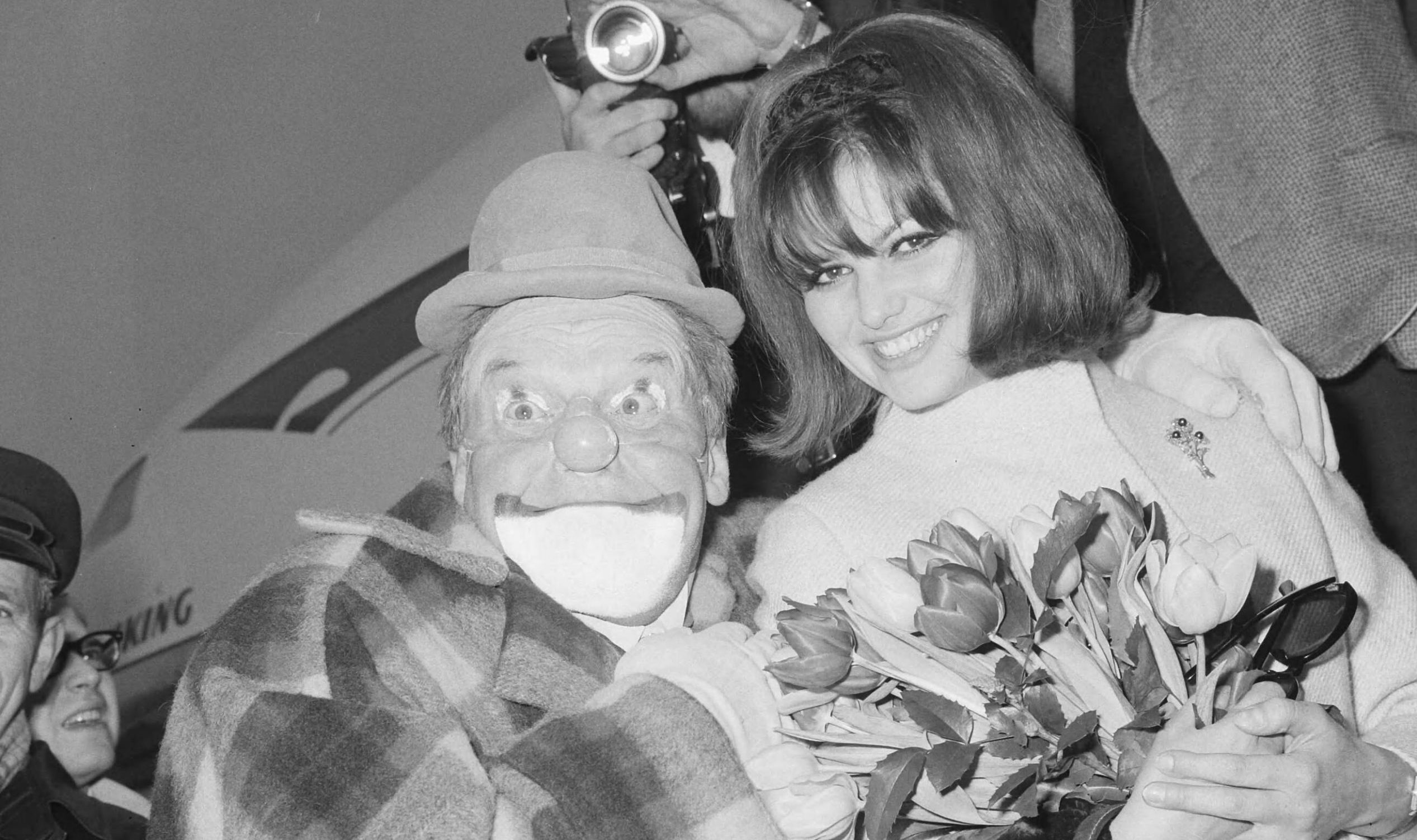
Cover picture: Claudia Cardinale in 1964 at Amsterdam Schiphol airport, © Nationaal Archief, Nijs, Jac. de / Anefo, Creative Commons CC0
More actor biographies from Der Bussard