

James Bond: Hardly any franchise attracts as many movie-goers as the adventures of the British secret service agent with the number 007. Many people know …
Katharine Hepburn: Kate the Great

It was at the end of the thirties when Katharine Hepburn was put on the list of actors considered “box office poison”: Back in 1937, …
Gert Fröbe: Goldfinger from Zwickau
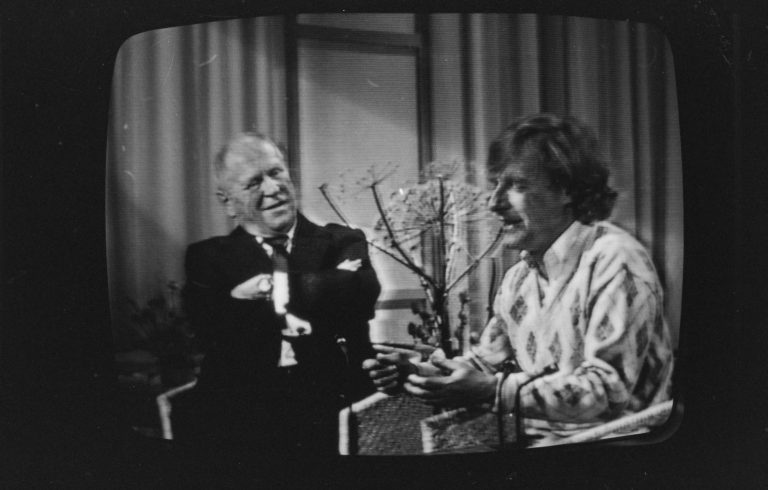
He was one of the few German actors to achieve international fame after the Second World War: Gert Fröbe. Gert Fröbe took part not only …
Dalida: The exotic chanteuse (3.)

Iolanda wanted to present her new musical style at the Olympia: But the owner of the Olympia, Bruno Coquatrix, did not believe that she would attract the audience with her new style. Dalida herself was also doubtful: she was not sure if her audience, used to chansons like Bambino, would accept melancholic chansons.
Dalida: The exotic chanteuse (2.)

The success of Bambino was enormous: she received a gold record for 300,000 sold records of Bambino. But at this point Dalida’s journey of success was far from over.
Lucien Morisse, her lover and also her manager, landed a second hit with her: Gondolier.
The song was written in French and Italian – which improved the chances for success. The plan worked: Gondolier became Dalida’s second big hit – this time the song also enjoyed great success in Italy.
Dalida: The exotic chanteuse (1.)

It was a life marked by the longing for love: the life of Iolanda Cristina Gigliotti. Under her stage name Dalida, she became world famous.
She sang in no less than ten languages and was admired by a wide audience.
Her image: the “Madonna”. There were critics who compared Dalida to a beauty from ancient Egypt.
But who was Iolanda Gigliotti?
Champagne: From devil’s wine to noble wine

It was a bloody battle that took place on the hills of Champagne in 451 AD: the Huns under King Attila were fighting the Roman …
Ayrton Senna: A man of charisma (7.)

Senna originally planned to move to Williams for the 1993 season. Williams driver Mansell retired from Formula One after his world championship title in 1992.
But Senna was surprised by a former rival: Alain Prost, who re-entered Formula One with Williams after a year out, had made arrangements. Prost’s contract stipulated that Ayrton Senna could not become his team-mate. This meant that Senna’s Williams option for 1993 was off. He had no choice but to stay at McLaren if he did not want to miss a year.
Ayrton Senna: A man of charisma (6.)

“But I refuse to walk away from a fight. That is my nature. I will fight to the end and whatever happens, whatever the cost so that for once we can bring justice to our sport.“ Ayrton Senna said this in the wake of the press scandal that erupted after the incident at the 1989 Suzuka Grand Prix
Mirella Freni: The Magic of a Voice
She was considered Herbert von Karajan’s favorite singer, was a friend of Maria Callas, and grew up with Luciano Pavarotti: Mirella Freni.